


- Key takeaway: The higher relationship-wide limit reflects a desire to help small businesses entering the lower-middle-market space.
- Expert quote: “It’s an opportunity for our clients to continue to grow, and [to] look at larger clients in this space.” — Timothy Little, Midwest region executive at Bank of America
Dan Pische, director of the Small Business Administration’s Office of Financial Assistance, served as a lender for the $8.6 billion-asset First American Bank in Elk Grove Village, Illinois, before going to work for the government in 2021.
Processing Content
Pische kept in his memory the dilemma faced by a borrower in food space a few years earlier. The company was forced to choose between tapping the SBA’s 504 program to acquire a crucial property or keeping an existing SBA 7(a) line of credit. Pursuing both forms of financing wasn’t an option.
Earlier this year, the SBA unveiled a plan to
“That really got us thinking about what we can do,” Pische said last week at American Banker’s Small Business Banking conference in Chicago. “Just because you purchase your real estate doesn’t mean you don’t need working capital … or you might not need a 7(a) term loan.”
The SBA implemented the higher relationship threshold in July. While size limits for individual 7(a) and 504 loans remain $5 million — the level that Congress set — the agency now lets borrowers combine loans from the two programs of up to $10 million. In a year of significant change at the SBA, this reform may rank among the most impactful.
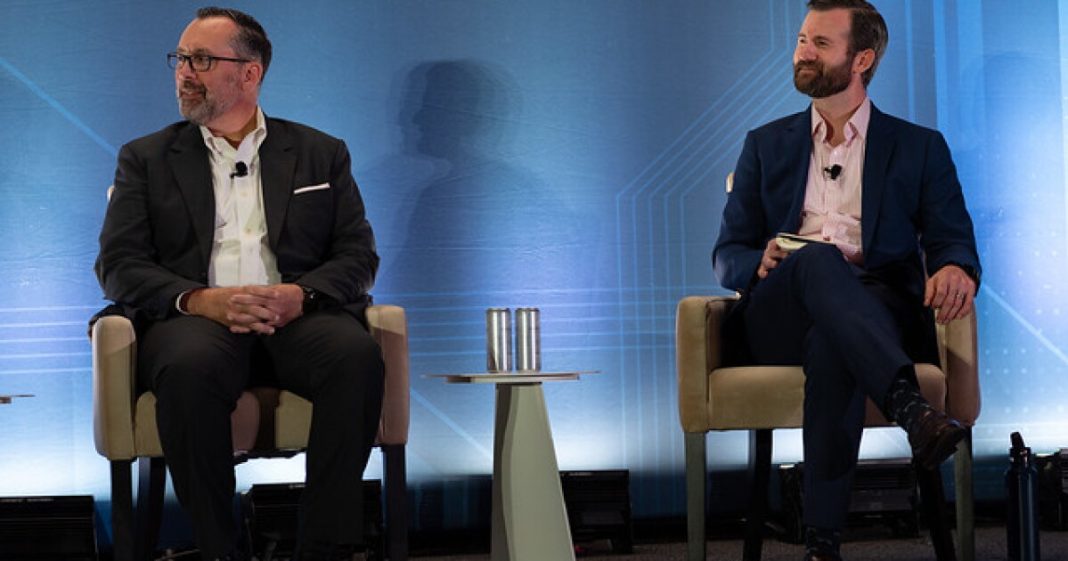
“I do think the SBA deserves some acknowledgement for coming up with the ability to combine the limits for clients,” Timothy Little, a Midwest region executive specializing in business banking at Bank of America, said at the Small Business Banking conference. “It’s an opportunity for our clients to continue to grow, and [to] look at larger clients in this space.”
The 7(a) and 504 are the SBA’s biggest lending programs. The flagship 7(a) program, the larger and more flexible of the two, is used to finance a wide range of business activities, while 504 focuses on real estate and heavy equipment.
The change in the size limit is intended to help small businesses that have grown past their early years and currently have more complex financing needs, Pische said.
“It’s really that company that has maybe moved through their smaller-dollar journey into more of the mid-size, and is now needing to have more sophisticated financial products,” Pische said.
The concentration on larger borrowers represents a shift from the policies the Biden Administration implemented from 2021 to early 2025. At that time, the SBA sought to widen access for smaller firms, waiving fees on small-dollar loans and loosening some credit guidelines.
Trump appointees, along with many private-sector sources, later blamed the Biden-era policies for a spike in problem loans. Last year, the SBA implemented a mid-year fee hike and reversed the underwriting changes. This year, the agency
The Trump administration sparked a controversy of its own in March, when it implemented a rule restricting access to SBA programs to U.S. citizens and U.S. nationals. The rules had previously permitted participation by lawful permanent residents, known more commonly as Green Card holders. The citizenship rules triggered
The Trump administration’s rules have reduced SBA pipelines, including at Bank of America, Little said.
“Reality is when you narrow a potential pool of borrowers, you’re probably going to have a smaller pipeline of some sort,” Little said. “I do think we’ve seen that.”
During fiscal 2026, which ended Sept. 30, total loan approvals in the 7(a) program declined 13% to $32.43 billion. Pische attributed the dip to a series of factors, including fears of a government shutdown that prompted a surge of loan applications at the tail end of fiscal 2025.
Read more:
Pische noted that fiscal 2026’s loan volume was higher than in several recent years, including fiscal 2024, which saw applications totaling $31.1 billion. Meanwhile, current policies, including the higher relationship threshold, are producing “strong volume across the board,” he said.
“The role of [SBA] products is expanding within a lot of institutions,” Pische said.